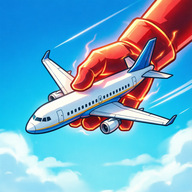
The Ultimate Catch a Plane Beginner Guide: Master Your First Flight
Master the skies with our comprehensive Catch a Plane beginner guide. Learn essential flight mechanics, pre-flight checks, and pro tips for smooth landings.
Ready to conquer the skies? If you have ever wanted to master the art of virtual aviation, this Catch a Plane beginner guide is designed to take you from a nervous rookie to a confident pilot. Whether you are stepping into a flight simulator for the very first time or trying to figure out how to Catch a Plane beginner guide concepts actually work in practice, understanding the fundamentals is crucial for smooth takeoffs and safe landings. Let's dive straight into the cockpit and explore everything you need to know to get your aviation journey off the ground.
Understanding the Basics of Flight Control
Before you even think about taxing down the runway, you need to get comfortable with your primary flight controls. Aviation relies on three main axes of movement: pitch, roll, and yaw. Mastering these control surfaces is the bedrock of any solid Catch a Plane beginner guide.
When you manipulate your control stick or yoke, you directly influence the control surfaces on the wings and tail. Understanding how these forces interact prevents over-steering and keeps your aircraft stable in mid-air. Community reports suggest that spending extra time in a tutorial or free-flight zone helps build the muscle memory required for fine adjustments.
| Control Axis | Primary Surface | Directional Effect | Beginner Tip |
|---|---|---|---|
| Pitch | Elevators | Nose up / Nose down | Make small, gentle pulls |
| Roll | Ailerons | Bank left / Bank right | Coordinate with rudder |
| Yaw | Rudder | Tail left / Tail right | Use mainly for crosswinds |
As you practice, remember that smooth inputs are always better than sudden jerks. Over-correcting is the number one mistake new aviators make when trying to maintain a steady altitude.
Pre-Flight Checks and Preparation
Skipping your pre-flight routine is a recipe for disaster. Every successful flight begins long before the wheels leave the tarmac. Following a structured checklist ensures your aircraft systems are fully operational and saves you from frustrating mid-air failures.
When reviewing basic flight tutorials, experienced players emphasize checking your fuel levels, control responsiveness, and weather conditions. Here is a quick reference table outlining a standard beginner pre-flight checklist.
| Checklist Item | Description | Why It Matters |
|---|---|---|
| Fuel Status | Check total fuel capacity | Prevents engine cutouts mid-flight |
| Control Check | Test ailerons, elevators, and rudder | Ensures full physical maneuverability |
| Weather Briefing | Review wind speed and visibility | Prepares you for turbulence or crosswinds |
| Throttle Check | Test idle and maximum power | Confirms engine responsiveness |
Taking two extra minutes on the ground can make the difference between a pristine flight and an unexpected crash landing. Always run through your steps methodically.
Mastering Takeoffs and Climb-Outs
The takeoff roll is one of the most exhilarating parts of flying, but it requires patience and precision. As you advance through your Catch a Plane beginner guide journey, you will learn that slamming the throttle forward immediately is rarely the best approach.
To achieve a clean takeoff, you need to build speed gradually while maintaining centerline alignment on the runway. Once you reach rotation speed—known in aviation as $V_r$—a gentle pull back on the stick will lift the nose.
- Step 1: Align your aircraft precisely with the runway centerline.
- Step 2: Advance the throttle smoothly to takeoff power without rushing.
- Step 3: Monitor your airspeed indicator as the craft accelerates down the strip.
- Step 4: Gently pull back on the controls at rotation speed to lift off.
Maintaining a positive climb rate immediately after takeoff ensures you clear obstacles and establish a safe altitude before adjusting your flaps or heading.
Navigating Cruise and Mid-Air Maneuvers
Once you have safely climbed to your cruising altitude, it is time to relax and focus on navigation and altitude maintenance. This phase of flight is where you can truly appreciate the scenery and practice your instrument reading.
According to community feedback and flight tracking data, maintaining a consistent trim setting dramatically reduces pilot fatigue during long cruises. Check out the following table comparing common cruising adjustments for beginner aircraft.
| Parameter | Recommended Setting | Purpose |
|---|---|---|
| Throttle | 65% - 75% power | Optimizes fuel efficiency |
| Trim | Neutralized for level flight | Relieves pressure on flight controls |
| Heading | Aligned with flight plan | Keeps you on course to destination |
| Altitude | Odd or even thousands (VFR/IFR) | Maintains safe vertical separation |
Always keep an eye on your instruments and horizon line. Small deviations in heading can compound over long distances, leading you far off your intended route.
Safe Approaches and Smooth Landings
Landing is widely considered the toughest part of flying, but with proper technique, you can stick every arrival. The secret to a successful touchdown lies in managing your descent rate and airspeed simultaneously during the final approach phase.
When you approach the runway, establish a stable glide slope. Keep your nose pointed slightly down to maintain speed, and use your throttle to control your descent rate rather than relying solely on the pitch controls.
| Approach Phase | Target Airspeed | Action Required |
|---|---|---|
| Downwind | Moderate Cruise | Lower flaps to initial setting, reduce power |
| Base Leg | Approach Speed - 10kts | Turn toward runway alignment, verify gear down |
| Final Approach | Final Approach Speed | Adjust throttle for descent rate, maintain centerline |
| Flare & Touchdown | Stall Warning Speed | Ease back on stick smoothly to touch main gear first |
If your approach feels unstable or too fast, do not hesitate to execute a go-around. Climbing back up to try again is always safer than forcing a bad landing. For more advanced tutorials, check out the Official Roblox Creator Documentation to understand game physics and custom flight mechanics.
Frequently Asked Questions
What is the most important skill for a beginner pilot?
Smooth control inputs are essential. Learning to make gentle, gradual adjustments rather than sharp, abrupt movements will immediately improve your flight stability.
How do I stop my plane from stalling?
Stalls occur when your airspeed drops too low to generate lift. Keep your nose down, maintain proper cruising or approach speeds, and add power if your airspeed drops dangerously.
Can I practice flight controls offline?
Yes, using free-flight modes or dedicated tutorial servers allows you to practice takeoffs, mid-air maneuvers, and landings without the pressure of live multiplayer environments.
Related Guides
Catch a Plane how to fly max distance: The Ultimate Flightline Strategy Guide
Master the art of long-haul aviation in Roblox Flightline. Learn how to catch a plane, how to fly max distance, and perfect your takeoffs and landings.
Catch a Plane How to Play: Ultimate Beginner's Guide for Roblox
Learn Catch a Plane how to play with this ultimate Roblox guide. Discover training tips, glove upgrades, gear boxes, and strategies to soar high.
Catch a Plane How to Time Jumps: Ultimate Runway Launch Strategy Guide
Master Catch a Plane how to time jumps effectively. Learn runway mechanics, grip training, and gear upgrades to soar across the sky in Roblox.
Catch a Plane: How to Catch Planes and Dominate the Ultimate Roblox Simulator
Master the art of how to catch planes in the viral Roblox simulator. Learn pro training strategies, gear upgrades, and how to reach the finish line fast.